
When you’re told you need a bone graft before getting a dental implant, it can feel like an unexpected detour on what you hoped would be a straightforward treatment. The good news is that bone grafting is a well-established, routine procedure, and understanding what it actually does makes the whole process a lot less intimidating.
At Precision Cosmetic & Family Dentistry in New Smyrna Beach, we believe that well-informed patients are better prepared patients. As part of our oral surgery services, we walk every patient through what to expect, why certain steps are necessary, and how each piece of the treatment plan works together toward a lasting result. Bone grafting is one of those steps that, when it’s needed, genuinely makes all the difference.
Why Jawbone Density Matters for Implants
A dental implant is a titanium post that fuses with your jawbone and acts as an artificial tooth root. For that fusion, called osseointegration, to happen successfully, there needs to be enough healthy bone in place to anchor the implant securely. Without adequate density and volume, the implant won’t have a stable foundation, and the procedure is far more likely to fail.
The challenge is that bone doesn’t stay put after tooth loss. Once a tooth is gone, the jawbone in that area begins to shrink, a process called resorption. The longer a tooth has been missing, the more significant the bone loss tends to be. This is one of the reasons we often encourage patients to explore implant options sooner rather than later, because every month that passes can mean less bone to work with.
 What Bone Grafting Actually Does
A bone graft restores the volume and density needed to support an implant. According to research published through the National Institutes of Health, bone grafting is required in approximately one in every four dental implants placed, making it a standard part of implant treatment rather than a complication.
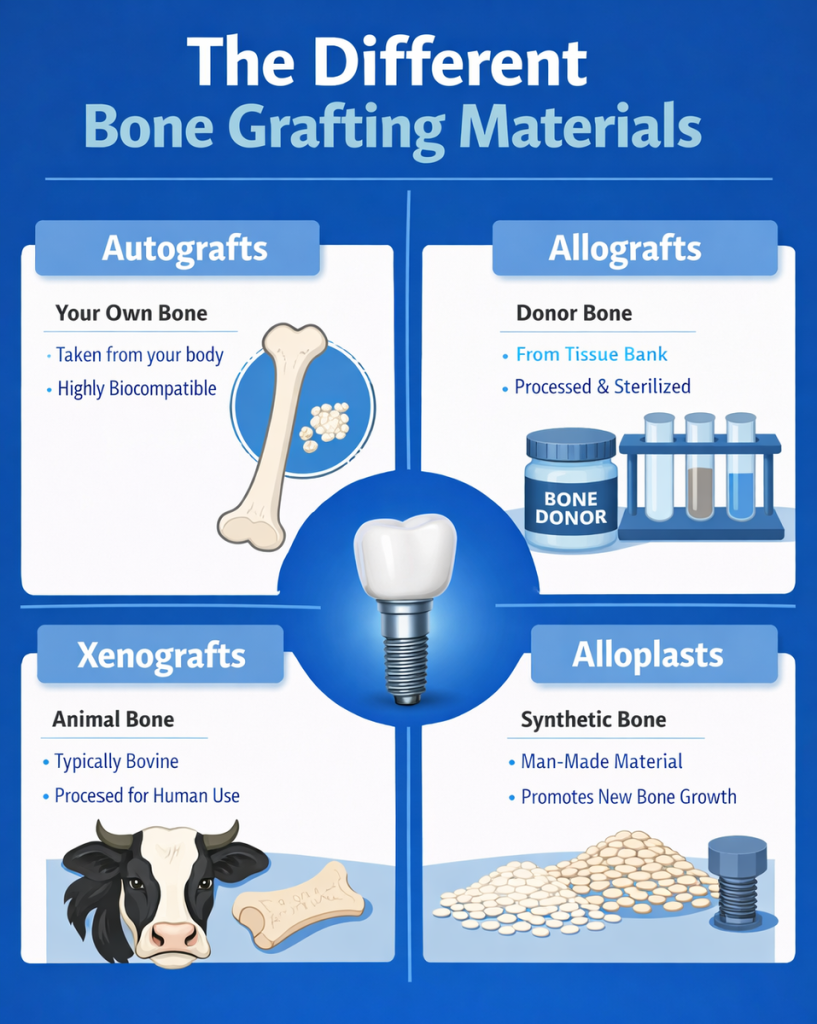
The procedure involves placing bone graft material into the area of the jaw that is deficient. Once placed, this material acts as a scaffold, encouraging your body’s own cells to grow new bone around it over time. There are a few different sources for graft material, and each has its own set of advantages:
- Autografts: Bone taken from another area of your own body, often considered the most biologically compatible option
- Allografts: Donor bone sourced from a tissue bank, processed and sterilized for safe use
- Xenografts: Bone derived from animal sources, typically bovine, and processed to integrate well with human tissue
- Alloplasts: Synthetic bone substitutes that stimulate new bone growth and are gradually absorbed by the body
The choice of material depends on the size of the graft needed, your specific anatomy, and your overall health history. We evaluate each case individually to determine what will give you the best outcome.
The Healing Timeline
One thing patients often want to know is how long a bone graft adds to the overall timeline. For larger grafts, the procedure is typically done separately from implant placement, with a healing period of several months before the implant can be placed. This allows the new bone to mature and reach the density required to support the implant long-term.
Smaller Grafts Done at the Same Time
In some cases, a smaller graft can be performed at the same time as the implant placement. This happens when the jawbone has enough volume to hold the implant, but not quite enough to fully surround it on all sides. These minor grafts are done right in the moment and don’t add significant time to recovery.
It’s worth noting that not every implant patient needs a bone graft. Some patients have enough bone volume and can move straight to implant placement. A thorough evaluation, including digital imaging, is how we determine where you stand.
What to Expect During Recovery
Recovery from a bone graft is generally manageable. Most patients experience some swelling, tenderness, and mild discomfort in the days following the procedure, which is typically well-controlled with prescribed or over-the-counter medications. Sticking to soft foods and following post-operative care instructions makes a meaningful difference in how smoothly the healing process goes.
As part of our restorative dentistry approach, we stay closely involved throughout the healing period, monitoring how the graft is integrating and making sure you’re on track before moving to the next step. This kind of attentive follow-through is central to how we care for our patients.
Precision Cosmetic & Family Dentistry: Taking the Time to Get It Right
At Precision Cosmetic & Family Dentistry, our vision is to blend family-centered care with clinical excellence. That means we don’t take shortcuts, and we don’t rush through the steps that matter. Whether you’re coming in for a dental exam or working through a full implant treatment plan, every decision we make is focused on your long-term comfort and health.
Dr. James Kortbus and our team genuinely care about the people who walk through our doors, and that starts with making sure you understand your options at every stage. If you’ve been told you may need a bone graft before implants, or if you’d like to learn more about what implant treatment would look like for your specific situation, we’d love to talk. Reach out to our office to schedule a consultation. We’re here to help you get the smile you deserve, one step at a time.