
Your bite affects more than how your teeth look. An overbite or underbite can change the way you chew, speak, and even how your jaw feels at the end of the day. If you’ve been told you have one of these issues, or suspect you might, the idea of correcting your bite and straightening your teeth at the same time probably sounds appealing. Most people want to know if clear aligners can truly handle more complex bite issues, or if traditional braces are still the better fit.
At Precision Cosmetic & Family Dentistry in New Smyrna Beach, Dr. James Kortbus uses advanced digital scanning technology and a thorough evaluation process to determine if clear aligner therapy is the right fit for your bite concerns. Not every case is the same, and that’s exactly why a one-on-one consultation matters before any treatment plan is created.
What Overbites and Underbites Actually Mean
An overbite occurs when the upper front teeth overlap the lower front teeth more than they should. A mild amount of overlap is considered normal, but when the upper teeth cover too much of the lower teeth, it can lead to uneven wear, jaw discomfort, and aesthetic concerns. An underbite is the opposite. The lower teeth sit in front of the upper teeth when the mouth is closed, which can affect both function and appearance.
Both conditions fall under the broader category of malocclusion, which simply means the teeth and jaws don’t align the way they should. The severity of the misalignment plays a significant role in determining if clear aligners can correct it.
Can Clear Aligners Treat These Bite Issues?
The short answer is yes, for many patients. Research published through the National Institutes of Health’s PubMed Central confirms that clear aligner therapy can achieve measurable bite correction when appropriate techniques are applied, including the use of small attachments bonded to the teeth to guide movement. That said, the degree of correction possible depends heavily on the complexity of the case.
Mild to Moderate Cases
Clear aligners tend to perform well on mild to moderate overbites and underbites. In these cases, the aligners work gradually through a series of custom-fitted trays, each designed to shift the teeth incrementally toward their target position. Patients who commit to wearing their aligners for the recommended 20 to 22 hours per day typically see consistent, predictable results.
Severe or Skeletal Cases
When a bite problem is rooted in jaw structure rather than tooth position alone, the correction required goes beyond what aligners can accomplish on their own. Severe cases may involve a combination of orthodontic treatment and other interventions. During your evaluation, Dr. Kortbus will assess whether your bite issue is dental, skeletal, or a combination of both, and recommend the most appropriate path forward.
How the Evaluation Process Works
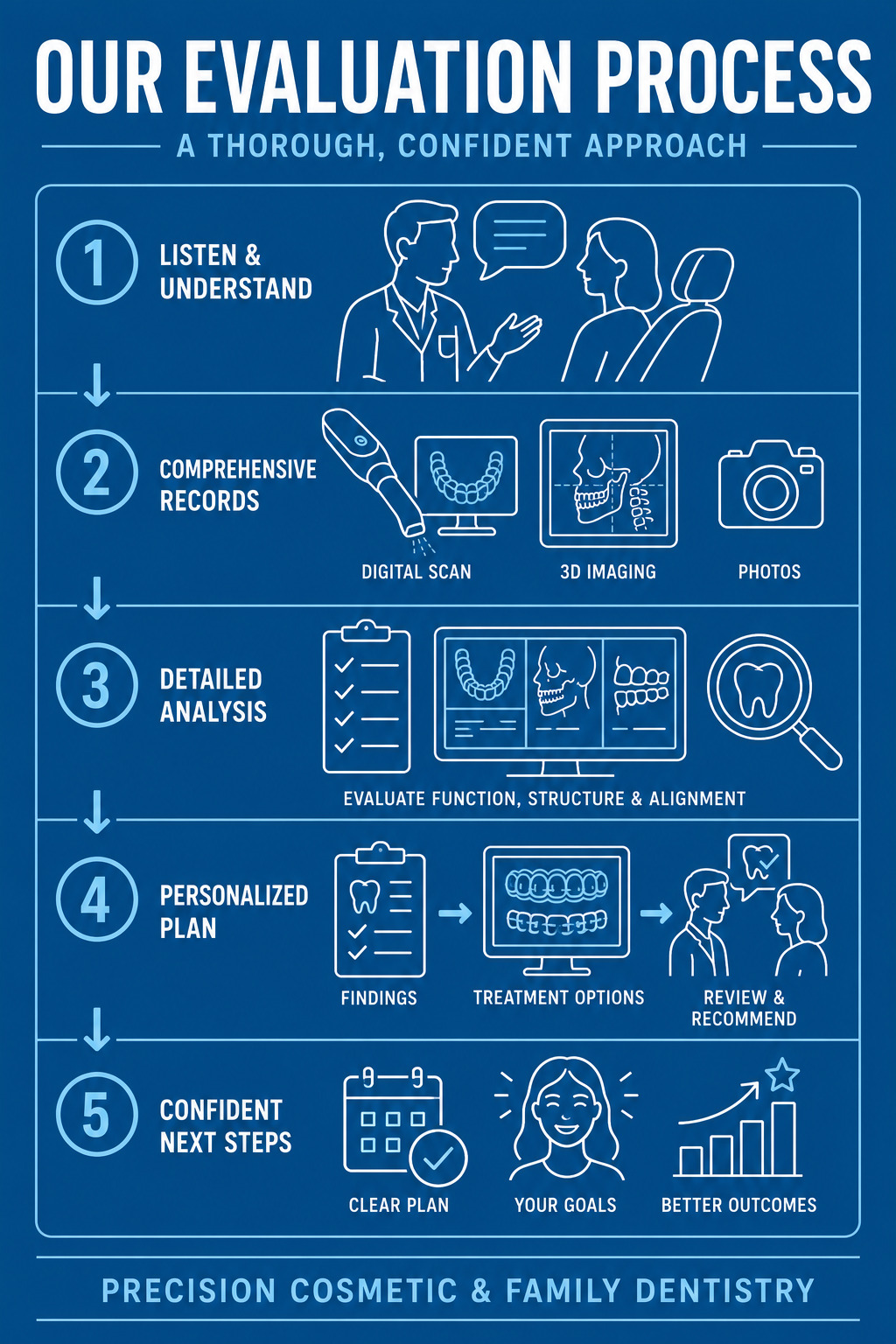
One of the advantages of coming to Precision Cosmetic & Family Dentistry is the technology we use to assess your bite before treatment begins. Our Dentsply Sirona PrimeScan intraoral scanner captures precise digital impressions of your teeth and bite relationship, and our CBCT imaging provides a three-dimensional view of your jaw structure. This level of detail allows Dr. Kortbus to evaluate your case far more thoroughly than a visual exam alone would allow.
For patients also interested in improving the overall appearance of their smile alongside bite correction, smile makeover planning can incorporate aligner therapy as a foundational step. Our digital dentistry technology allows you to preview projected results before treatment begins, taking much of the guesswork out of the process.
What to Expect During Treatment
Clear aligner treatment for bite correction typically follows the same general structure as aligner therapy for alignment alone, though bite cases may require more trays or refinement phases. You will receive a series of aligners to wear in sequence, switching to a new set every one to two weeks as your teeth and bite gradually shift. Regular checkups allow Dr. Kortbus to monitor your progress and make any necessary adjustments.
The removable nature of clear aligners also makes it easier to maintain your oral hygiene routine throughout treatment, which is especially important since misaligned teeth can sometimes make thorough cleaning more difficult.
Find Out If Clear Aligners Are Right for Your Bite at Precision Cosmetic & Family Dentistry
Dr. Kortbus trained at NYU College of Dentistry and brings both clinical depth and a genuine interest in helping patients understand their options. As a former president of the Volusia Flagler Dental Association and an active member of the ADA and FDA, he stays current on the latest in orthodontic care so every recommendation is grounded in evidence and tailored to the individual.
If you’re curious whether clear aligners can address your overbite or underbite, the best place to start is a conversation. Request an appointment online or contact our office directly, and we will help you determine what your bite needs and what treatment can realistically accomplish.