
If you’ve been looking into clear aligners, you’ve probably already wondered what your insurance will actually pay for. The question catches a lot of people off guard, because the answer isn’t as straightforward as it is for routine cleanings or fillings. Your coverage depends on your specific plan, your age, and how your insurer classifies orthodontic treatment. With a little guidance, you can get a clear picture of your benefits before committing to anything.
At Precision Cosmetic & Family Dentistry in New Smyrna Beach, we work with patients every day who are weighing the cost of clear aligners against what their benefits might cover. Dr. James Kortbus and our team help you understand both your treatment options and the financial aspects of care so you can make a confident, informed decision.
How Dental Insurance Handles Orthodontic Treatment
Most dental insurance plans are structured around three categories of care: preventive, basic restorative, and major restorative. Orthodontic treatment, including clear aligners, often falls into a separate category altogether. According to the American Dental Association’s Health Policy Institute, only about 63% of working-age adults have private dental benefits, and coverage for orthodontics within those plans varies considerably. You can review the full list of insurance plans we accept to see whether your carrier is already in our network.
Does the Type of Plan Matter?
It does, and significantly. Employer-sponsored plans are more likely to include orthodontic benefits than individual plans purchased on the open market. When orthodontic coverage is included, plans typically pay around 50% of costs, up to a lifetime maximum that generally ranges from $1,000 to $2,000. That means even with coverage, there is still a meaningful out-of-pocket portion to plan for.
Are Clear Aligners Treated Like Braces?
Many plans that include orthodontic benefits cover clear aligners the same way they cover traditional braces. The key phrase there is “if orthodontic benefits are included.” Some plans cover braces but specifically exclude clear aligners, while others treat them as equivalent. Reviewing the orthodontic section of your Summary of Benefits and Coverage document is the most reliable way to know for certain.
What Affects Coverage for Adults Specifically
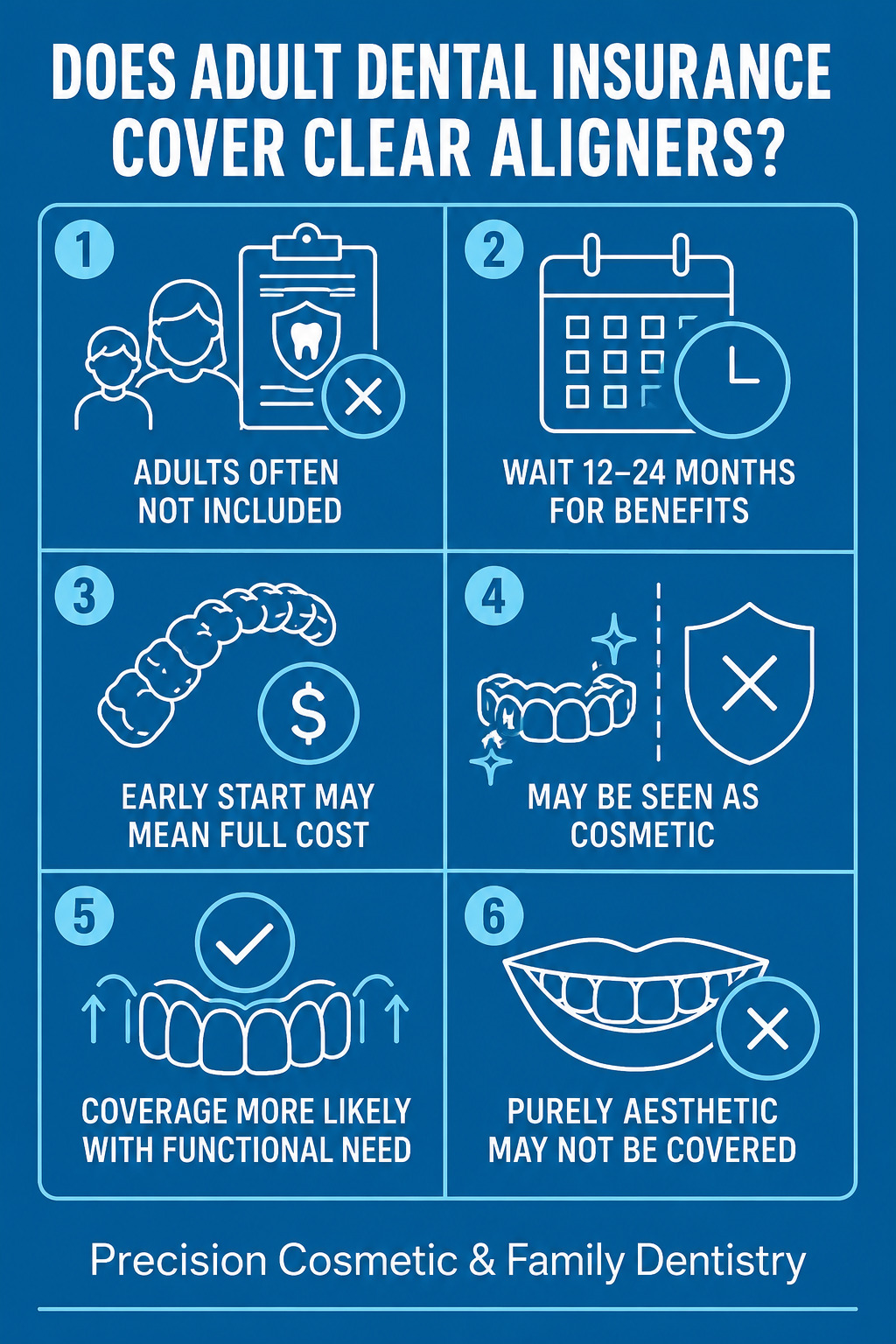
Coverage for adults can be harder to come by than coverage for children. Some plans limit orthodontic benefits to patients under 18, and even plans that include adult orthodontic coverage may have waiting periods of 12 to 24 months before those benefits take effect.
Age Limits and Waiting Periods
If you are new to a dental plan or recently switched insurance, you may need to meet a waiting period before orthodontic benefits apply. This is worth knowing before you begin treatment, because starting clear aligner therapy before benefits are active could mean the entire cost falls on you out of pocket.
How Your Plan Classifies the Treatment
Another factor is whether your insurer views clear aligner treatment as medically necessary or primarily cosmetic. Plans are more likely to apply orthodontic benefits when there is a functional concern, such as a misaligned bite, crowding that affects oral hygiene, or spacing issues that increase risk. Primarily, aesthetic cases may receive limited or no coverage. If you are also considering other cosmetic dentistry services alongside your alignment treatment, it is worth discussing the full scope of your goals at your consultation so we can help you plan accordingly.
What to Do If Coverage Is Limited
Not having robust orthodontic benefits doesn’t mean clear aligners are out of reach. Our financing options through CareCredit and Cherry allow you to spread the cost of treatment over time with payment plans designed to fit a range of budgets. For patients without insurance, our in-house membership plan at $299 per year covers exams, X-rays, and healthy-mouth cleanings, plus 20% off all additional treatments.
Get Clear Answers at Precision Cosmetic & Family Dentistry
Understanding your coverage is one of the first conversations we have with every clear aligner candidate. Dr. Kortbus trained at the NYU College of Dentistry and brings a thorough, patient-centered approach to every consultation, helping you see exactly what your options are before making any decisions. As a former president of the Volusia Flagler Dental Association and current ADA and FDA member, he brings both clinical depth and community commitment to every patient he sees.
If you are ready to explore whether clear aligners are right for you, we make it easy to take the first step. Contact our office to schedule a consultation, and we will walk you through the financial details alongside your treatment options so nothing catches you off guard.